


 Italiano

Sardinian honey: sweetness that captures the flavor of the island.
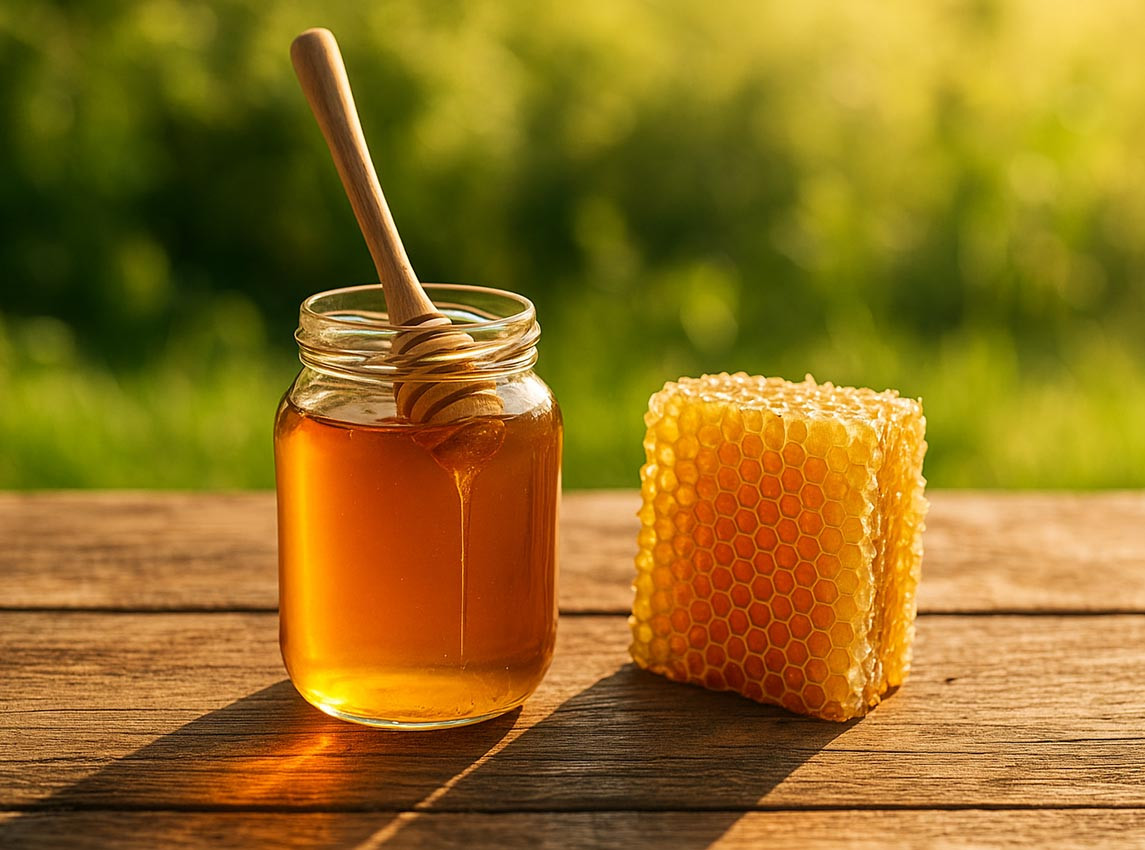
There is a simple way to understand Sardinia without postcards: taste its honey.
Inside that jar lies the sea breeze that dries the fields, the wild herbs of the Mediterranean scrub, the rhythm of unpredictable seasons, and the patient work of beekeepers who move their hives with the blossoms. Sardinian honey is not a generic category: it is a mosaic of varieties that change with the landscape, with flavors that are sharp, surprising, and always unmistakable.
The land itself is the first key. Sardinia’s Mediterranean scrub is a natural laboratory of asphodel in the clearings, thistles in the wild fields, eucalyptus trees dotting the plains, citrus groves perfuming the valleys, and above all the strawberry tree, a stubborn shrub that blooms counterintuitively in autumn and early winter. Bees move through this environment like disciplined explorers: from spring’s citrus blossoms that open the sweetest season, to summer’s eucalyptus that adds a balsamic touch, to the spontaneous flowers of thistle and asphodel, and finally to the strawberry tree, the island’s most famous and distinctive signature. This natural calendar, shifting with the weather, makes it possible to produce highly distinctive monofloral honeys. Beekeepers place hives close to the blooming species, harvest quickly to avoid unwanted blends, let the honey rest, filter carefully, and jar it with the goal of preserving its purity and crystalline nature.
Among the varieties, strawberry tree honey speaks most clearly of Sardinia’s character. Dark amber with greenish or copper highlights, it brings vegetal and roasted notes to the nose and a refined bitterness on the palate that has no equal in Italy. It is not a flaw but its strength, the result of a late bloom and an aromatic profile far from “classic” honeys. Its flavor may divide opinion, yet when paired with Sardinian aged cheeses, from robust pecorino to hard and long-matured varieties, it creates a magnetic combination. At the opposite end of the spectrum, asphodel honey is pale, bright, and delicate, with aromas of wildflowers and clean hay, ideal for desserts, yogurt, fresh fruit, or light breakfasts: a springtime whisper that lingers discreetly. Thistle honey, more herbal and persistent, offers floral notes that are less sweet, often crystallizing into a compact texture; it is perfect with white meats glazed for balance or sautéed bitter greens. Eucalyptus honey adds a balsamic, almost medicinal line without becoming overwhelming, well suited to teas, marinades, or dishes where sweetness should “breathe.” Sardinian millefiori honeys, meanwhile, are snapshots of a season: changing year by year because the balance of blossoms shifts, they embody complexity and harmony while carrying the unmistakable imprint of the island.
Flavor is only half the story. Honey is made of simple sugars like glucose and fructose, quick energy for the body, but also contains enzymes, trace minerals, and aromatic compounds that come directly from the plants the bees visit. The nutritional profile is not marketing jargon but truly varies by species and season. Crystallization, often viewed with suspicion, is actually the natural behavior of raw honeys, tied to the balance of fructose and glucose and the presence of microcrystals. It is not a flaw; on the contrary, it signals quality and delicate processing, as opposed to industrial syrups stripped of their personality.
Beekeeping in Sardinia is also a form of landscape stewardship. Bees work as pollinators, keeping the island’s Mediterranean ecosystem alive. Without them, many blooms would weaken and wither, threatening the balance of entire rural areas. The nomadic practice of moving hives — from citrus groves to scrub-covered hills to the areas where the strawberry tree blooms late — is not a fashion but a traditional, sustainable way to follow nature and obtain pure monofloral honeys without forcing yields. In difficult years, with prolonged drought or untimely rain, production can fall sharply. This makes certain honeys, especially strawberry tree honey, rare and more valuable, with prices that reflect their scarcity.
In Sardinian cuisine, honey is not a garnish but a transformative ingredient. It shines in seadas, where the warmth of fried pastry filled with cheese embraces a drizzle of honey that balances saltiness and fat. It complements aged cheeses, where the bitterness of strawberry tree honey or the balsamic depth of eucalyptus stand up without overpowering. It enriches pane carasau at breakfast, restores dignity to a rustic meal, and slips into sweet-and-sour emulsions for white meats, roasted vegetables, or summer fruit. Each variety interacts differently with ingredients, and none is limited to “sweetening”: Sardinian honey adds structure, aroma, and depth.
Choosing a serious honey means learning to read the jar and listen to the spoon. Botanical and geographical origin on the label, transparency about the harvest and year, and the beekeeper’s willingness to share their methods are signs of a supply chain that respects both product and consumer. The tasting confirms it: a clean honey has distinct aromas, no burnt sugar or caramel notes, no off-flavors. If it crystallizes, it melts smoothly in the mouth without gritty residue; if it remains liquid longer, it is because the variety allows it or because it has been carefully handled to preserve its natural fluidity, not because it was overheated into oblivion.
Sardinian honey, in all its expressions, is a story of biodiversity transformed into food. It is the encounter between resilient plants and an apicultural tradition that has learned to dance with the seasons. It does not allow shortcuts: it demands patience, attention, and respect. In return, it offers something few foods can still deliver with such intensity: the physical sense of a place. For those who seek authenticity, this jar holds an entire island.
Discover all the varieties of artisanal Sardinian honey you can find on 360italymarket.
More News
- World Pasta Day 2026: Italy's pasta in numbers
- Fettuccine Alfredo: the true story of the Roman dish the world believes is American
- The vendemmia: the ritual that bring Italy to a halt every september
- PPWR 2026: what changes for food producers and e-commerce
- The Italian Aperitivo: Native Sparkling Wines and Artisan Charcuterie
