


 Italiano


The Revival of Artisanal Vinegar
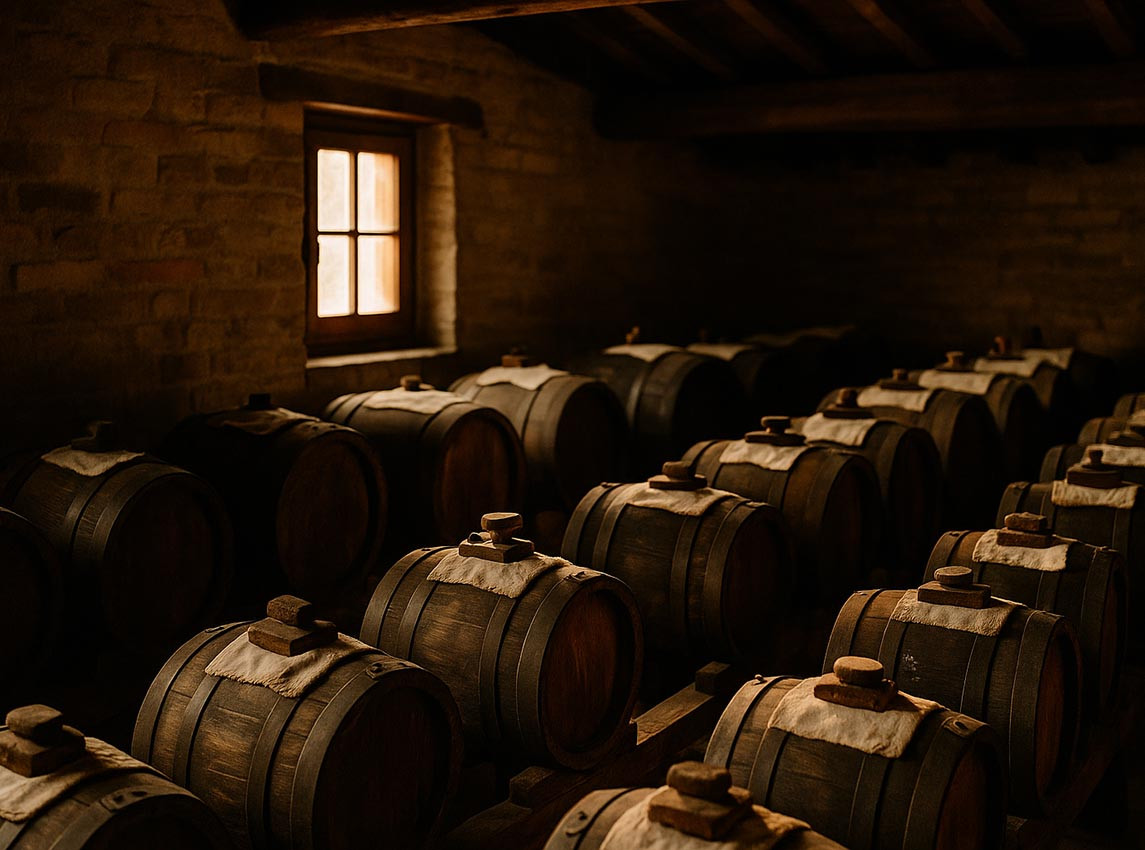
Once upon a time, vinegar wasn’t bought, it was made at home, slowly, almost by magic.
In every cellar or attic, there was a demijohn or a wooden barrel guarding a mysterious liquid — a little sour, a little alive — that bubbled when the weather changed and smelled of wine long past its celebration. No one called it “artisanal vinegar”; it was simply vinegar, made as it had always been made, passed down through fathers and grandfathers, through generations.
The origins of vinegar go back thousands of years. The Sumerians and Egyptians were among the first to notice that wine could become something else. As early as 3000 BC, they were already using it as a natural preservative. The Greeks called it oxos, considering it a gift from the gods, while the Romans used it daily in food, in the fields, and even in the army — soldiers drank it mixed with water to quench thirst on long marches. Vinegar was part of everyday life long before labels and commerce.
In the Middle Ages, it became a refined product. Monasteries and noble courts began to cultivate it with care. In Modena and Reggio Emilia, around the year 1000, people started storing cooked grape must in barrels made from precious woods. This marked the birth of what we now know as Traditional Balsamic Vinegar — not just a condiment, but a culinary relic. Each noble family had its own set of barrels, passed down as part of the dowry.
But vinegar in Italy isn't only about Modena. Across the country, tradition met geography: in Piedmont, people made vinegar from apples; in Tuscany, from red wine; in Sicily, using Nero d’Avola or Catarratto grapes. Sometimes sweet, sometimes harsh, always genuine. Every region had its own method, timing, wood. And behind each vinegar was a silent, patient story.
Then came industry. Vinegar lost its patience, its wood, its time. It became transparent, aggressive, uniform. Wooden barrels were replaced by stainless steel and speed. Natural bacteria gave way to controlled cultures. And while the result might be “regular,” it lost the soul that had lasted for millennia. Vinegar became just another sad liquid sitting on supermarket shelves.
But not everything was lost. Quietly, some continued the old ways. They let time settle, let the rush evaporate. They remained the guardians of barrels — producers who still wait years for a few precious drops. Not just in Emilia, but in Tuscany, Trentino, Campania, Calabria. Some work with organic apples and wild fermentation, others with figs or pears, or even beer and mead. It’s the Italy that resists, that refuses to conform, that believes taste must have a story.
Today, artisanal vinegar is no longer just a relic. It’s a symbol of a new culinary vision. Acclaimed chefs and humble cooks alike use it with respect and imagination. Not only for salads, but in reductions, marinades, sauces, cocktails, even desserts. Vinegar is alive — it adds depth, sharpness, soul. Every drop tells a story.
And more and more people are making their own. With good wine, a little mother, a small barrel. Maybe they fail the first few times. Maybe they don’t sell a single bottle. But they rediscover the slow rhythm of fermentation, the changing smells, the creaking of barrels breathing with the air. Making vinegar today is an act of resistance.
Because in this revival, there's more than flavor. There’s a way of living. A way of slowing down. A way of seeing value where modern life sees only efficiency. Fermentation isn’t a flaw. Acidity isn’t a defect. Time isn’t a cost. It’s an ingredient.
And so this revival is welcome. Let vinegar be what it always was: a living, noble liquid, telling stories of land, people, and patience.
Discover our artisanal Italian vinegar in 360italymarket.com
More News
- World Pasta Day 2026: Italy's pasta in numbers
- Fettuccine Alfredo: the true story of the Roman dish the world believes is American
- The vendemmia: the ritual that bring Italy to a halt every september
- PPWR 2026: what changes for food producers and e-commerce
- The Italian Aperitivo: Native Sparkling Wines and Artisan Charcuterie
